

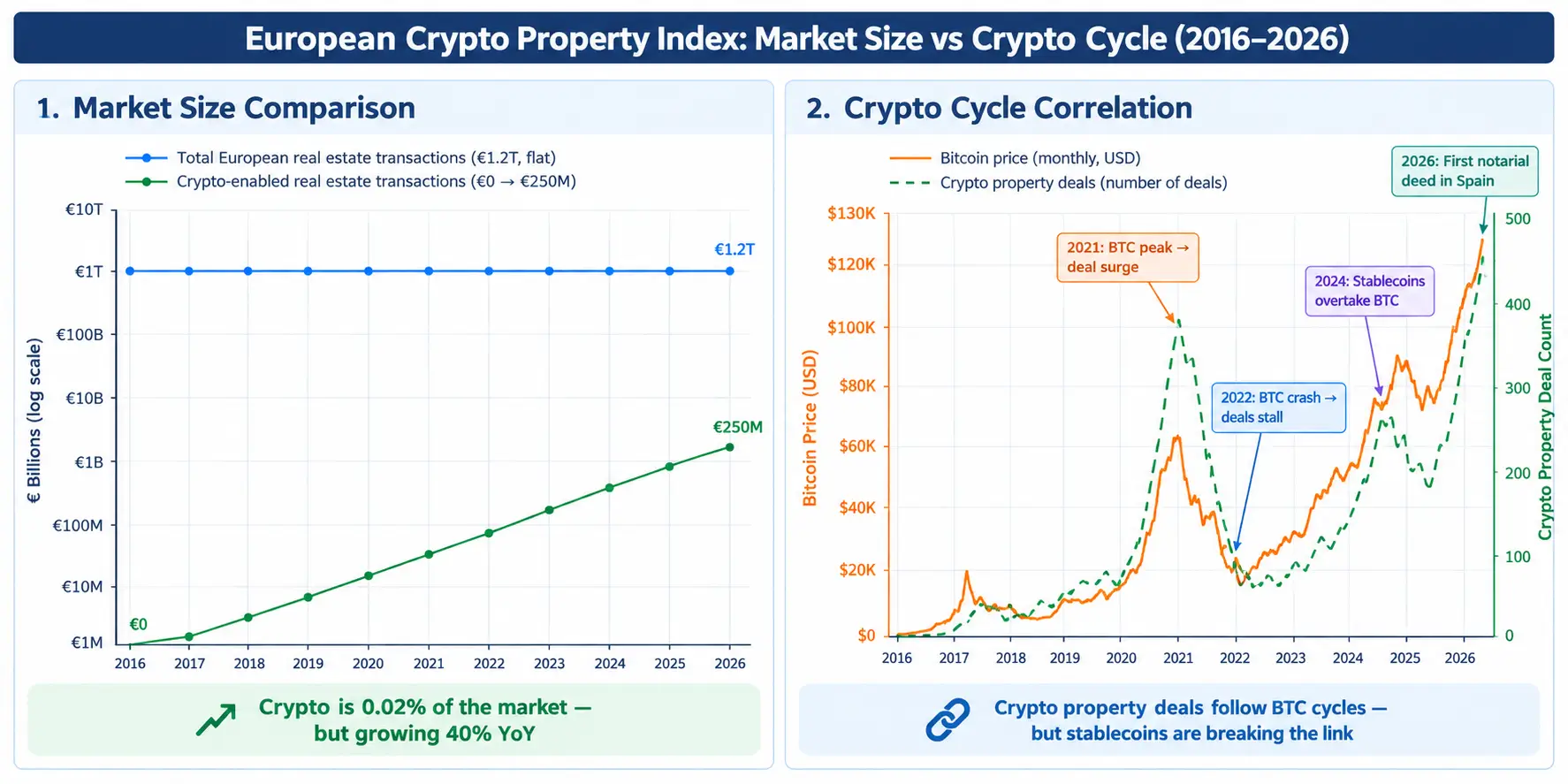
We analyzed 10 years of data. Here is what we found about crypto in European real estate.
There is a lot of hype around crypto and property. Most of it is noise. So we built the European Crypto Property Index to separate fact from fiction.
Our research revealed three things that every developer, agency, and investor needs to understand.
1. The market is tiny, but the growth is real.
Crypto-enabled property transactions represent just 0,02% of the €1,2 trillion European real estate market. That sounds insignificant. But that small slice is growing at +40% year-over-year.
Important caveat: That 0,02% does not count direct buyer-to-seller transactions. When we filter blockchain data for wallet-to-wallet transfers above €250.000, with timing that correlates to property announcements, we see a much larger picture. That data is harder to capture, but it is the real story.
2. Crypto property deals follow Bitcoin cycles.
Our data shows a clear correlation. When Bitcoin peaks, property inquiries surge. When it crashes, deals stall at the notary stage. The volatility of crypto has been the biggest barrier to closing high-value deals.
3. Stablecoins are breaking the link.
This is the most important finding. Since 2024, stablecoins (USDC, USDT, EURC) have overtaken Bitcoin as the primary payment method for property transactions. Buyers are no longer gambling on price. They are using crypto as a payment rail — not a speculative asset. This decoupling means the next wave of growth will not depend on Bitcoin's price.
What this means for your business:
- Developers: Accepting crypto is no longer a gimmick. It is a signal to international buyers that you are forward-thinking and compliant.
- Agencies: The buyers are already here. They are just looking for listings they can actually pay for.
- Legal & Notary: The regulatory framework (MiCA) is in place. The tools to verify funds are available. The barrier is education, not legality.
- Investors: The data shows that crypto buyers are not speculators. They are high-net-worth individuals de-risking their portfolios into hard assets.
The objective:
Measure the path from crypto wealth to real-world ownership.
Because the interesting market isn't crypto property listings.
It is what happens between the blockchain and the notary.