

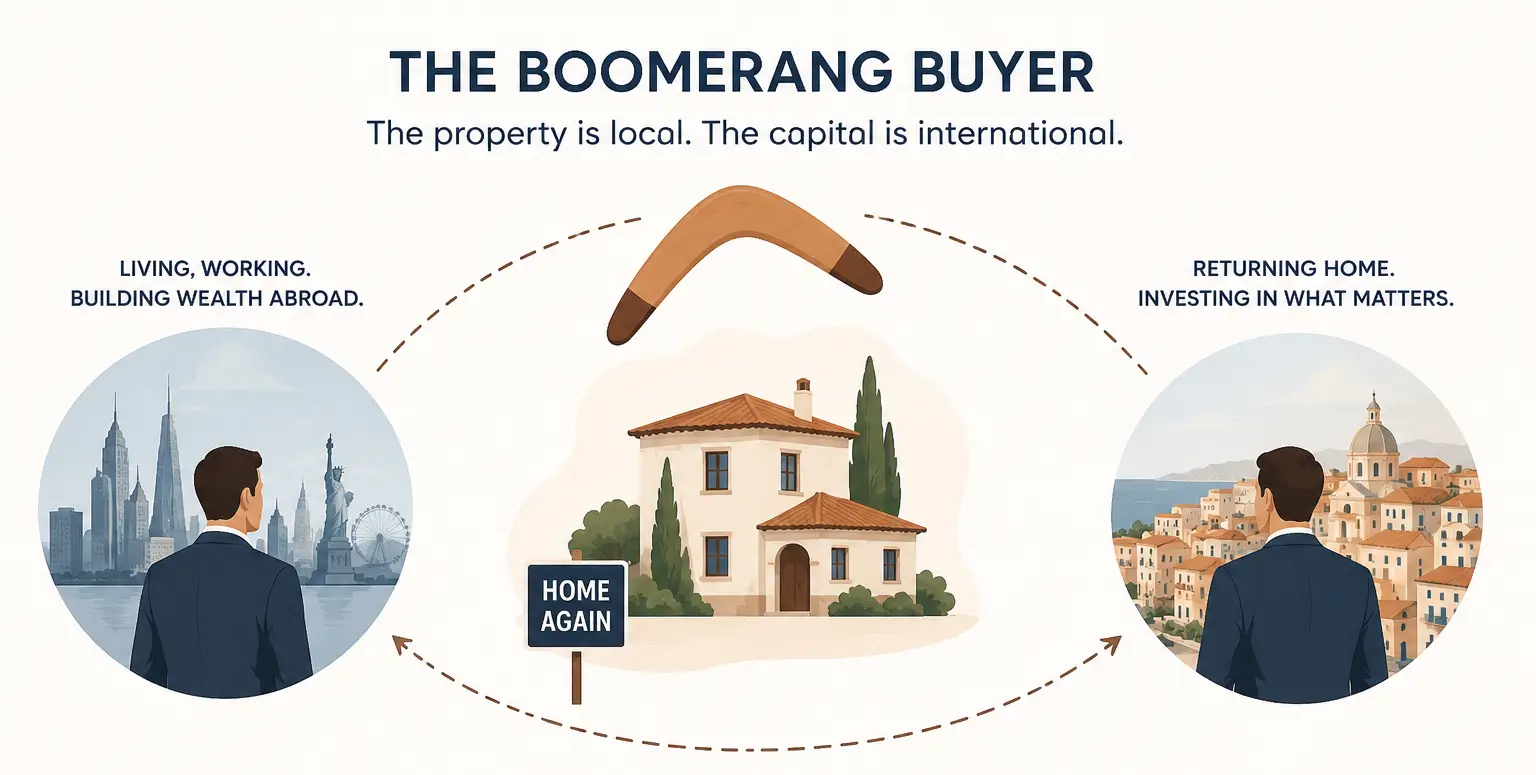
One-third of foreign buyers in Southern Europe may actually be returning citizens.
And that matters for cross-border payments.
Italians buying in Italy.
Greeks buying in Greece.
Portuguese living abroad returning home.
Across Southern Europe, a significant segment of “foreign” property demand comes from people who have lived, worked and accumulated wealth abroad — and are now bringing that capital back home.
They often look very different from traditional foreign buyers.
- They may have substantial savings or investments abroad.
- They may require little or no mortgage financing.
- They may move larger amounts in a single transaction.
- They often already understand the local property market.
- They may have bank accounts, tax obligations and financial history in multiple jurisdictions.
From a payments perspective, this creates something important:
A predictable, high-value cross-border corridor.
The transaction may be a domestic property purchase.
But the money is international.
That means the real complexity isn't necessarily finding the property or financing it.
It's moving capital across borders while coordinating source of funds, FX, compliance, timing and closing requirements.
The “boomerang buyer” is still largely invisible in traditional foreign-buyer statistics.
But for cross-border transaction infrastructure, it may be one of the most important segments to understand.